Active transverse locking · Dental implantology
The friction ceiling
has been reached

From friction-based stability
To geometric stability
Active transverse locking · Dental implantology
The friction ceiling
has been reached
From friction-based stability
To geometric stability
We apply to dental implantology the non-compressive fixation principle that revolutionized trauma surgery: an architecture that does not depend on sustained compression against bone, designed to reduce dependence on trabecular bone density.
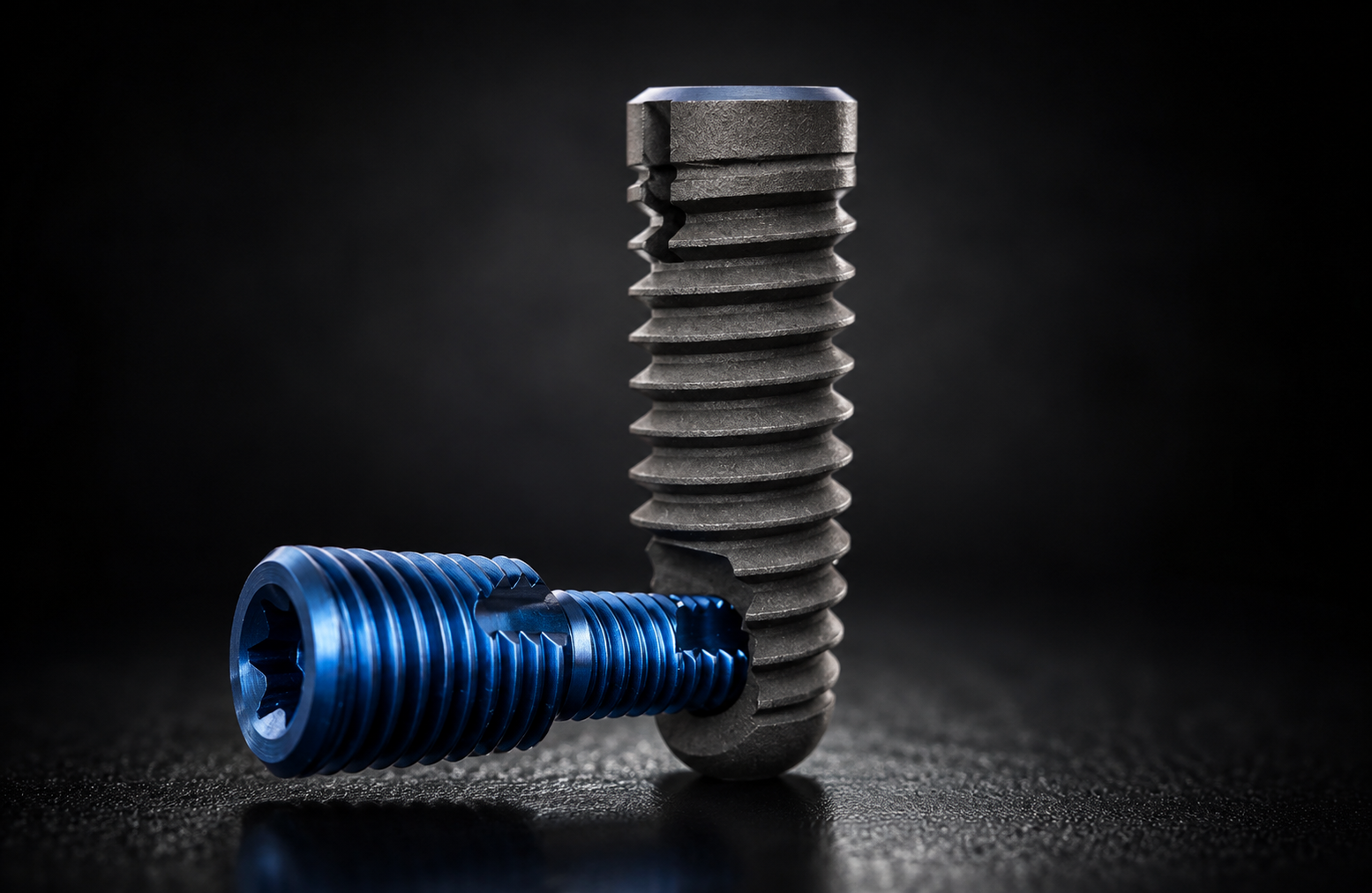
Should primary stability depend on compression of the tissue that must heal?
Stability without tissue compression.
For decades, implant primary stability has been pursued through radial compression and a high insertion torque (>35–50 N·cm). However, microcirculation collapses at pressures as low as 20–30 mmHg. Between that vascular-collapse threshold and the stress required to fracture bone, there is a gap of more than four orders of magnitude. This suggests bone tissue may suffer compression-induced ischemia at levels far below those needed to cause detectable structural damage.
1. Compression
2. Ischemia
3. Bone loss
4. Instability
Conventional torque
>35–50 N·cm
Radial compression that exceeds the physiological capillary perfusion threshold.
RAMAX® insertion
<20 N·cm
Design parameter: low torque, aimed at limiting radial interference at the interface.
Vascular threshold
20–30 mmHg
Physiological limit of capillary collapse in non-expandable bone canals.
Active fixation
6 DOF
Architecture designed to restrain 6 degrees of freedom through a through-going transverse screw.
— a physiological relationship, not a direct quantitative equivalence between the two magnitudes (N·cm and mmHg).
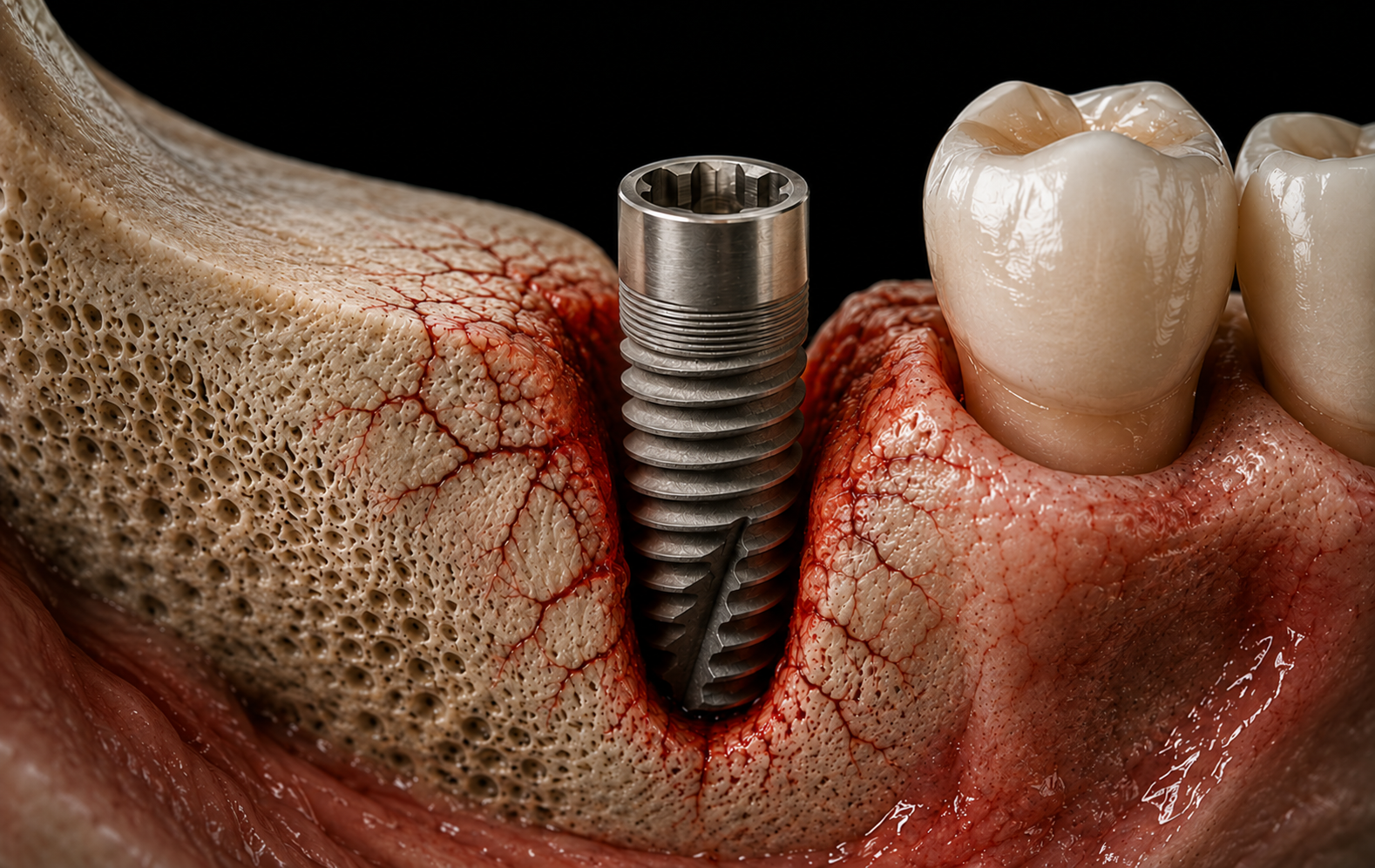
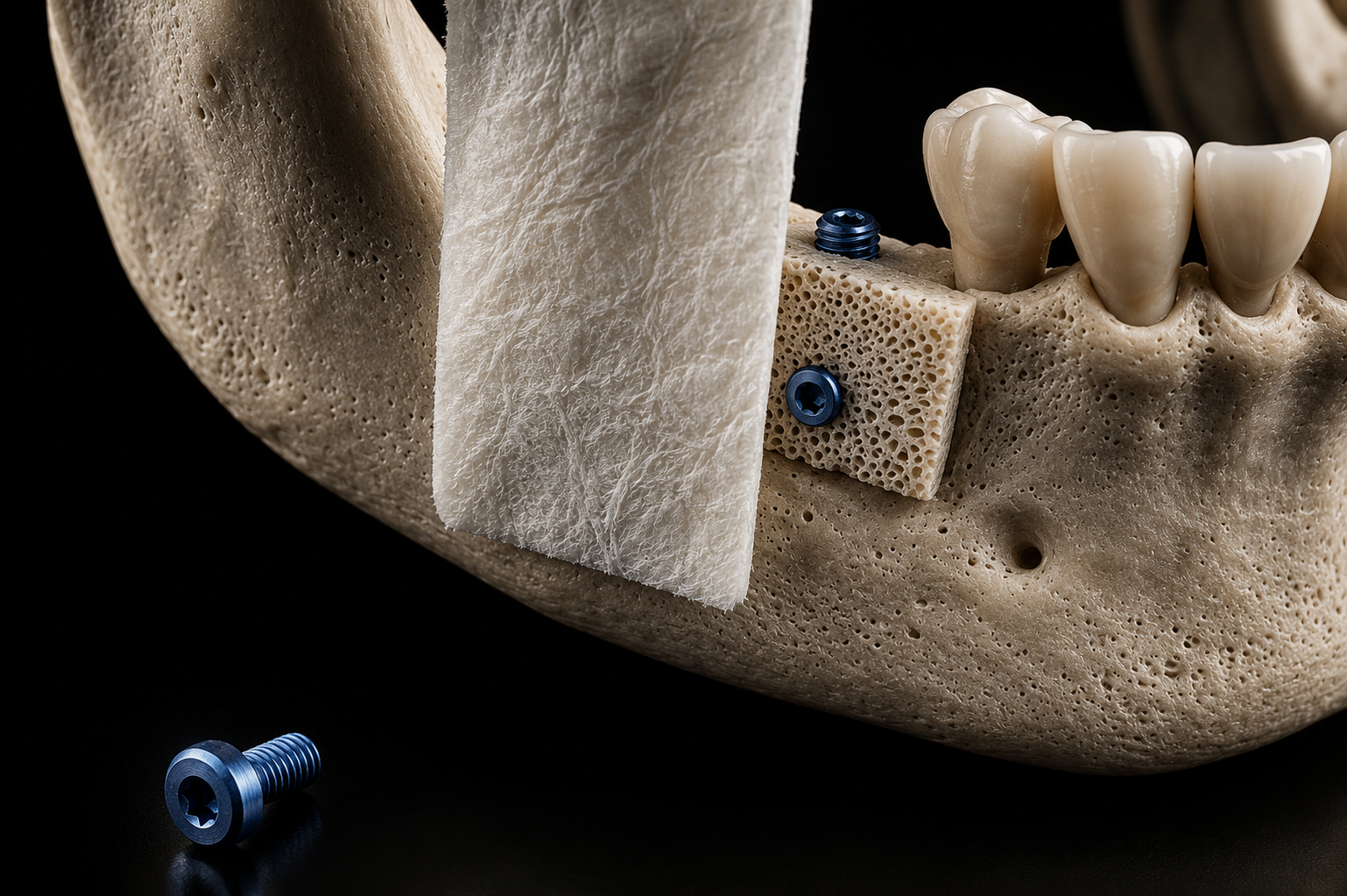
Structural stability through geometric design
The argument does not rest on an isolated claim. The underlying physics — vascular collapse under compression, in any confined bone — was already demonstrated in real bone in 1988, and solved with geometric anchorage that does not depend on that compression, that same year, via a different engineering path. RAMAX® applies that same physics, already validated in orthopedics for nearly four decades, to oral implantology.
Impact across the medical technology ecosystem
Clinical approach
- Low-torque insertion
- Hypothesis of an attenuated stability dip
- Objective of reducing outcome variability across surgeons
Patient approach
- Design objective of crestal bone preservation
- Potential to treat complex defects in a single surgical stage
- Potential relevance for patients with compromised bone quality or systemic conditions affecting healing capacity
System approach
- Worldwide Tier-1 corporate networks
- Protocol designed for compatibility with open digital workflows
- Design aimed at compatibility with open prosthetic ecosystems and conventional libraries
Technical roadmap and scientific validation
We are not trying to reinvent biology. We are applying the principles of physics that already transformed trauma surgery, and confirming it with our own data.
From hypothesis to regulatory data.
Scientific precedent
Orthopedic and histological literature supporting the relevance of cortical perfusion and locked geometric fixation that does not rely on sustained compression (Perren 1988, Brumback 1988, Uhthoff 1994).
RAMAX evidence
RMS Foundation, Switzerland: In an independent laboratory test, RAMAX system demonstrated almost twice the structural stiffness under lateral loading as the conventional system — an 83% increase.
Under validation
GLP preclinical program with AnaPath: histomorphometry, tissue response, load-bearing stability — according to the protocol ultimately approved and executed.
The hypothesis is formulated from physics; the value is built by converting it into evidence of our own — reproducible and usable for regulatory purposes.